AI, Automation & Software for Networking Providers
Every ticket triaged, every customer kept informed.
Internet service providers, managed network and IT service providers and network installers lose time to repeat tickets, outage queues and manual booking. We build the chatbots, agents, automations and software that sort support requests, keep customers updated and give your engineers tickets they can act on.
Why Choose GetAIChatBots for Networking Providers
Networking support is won on the first useful answer. A customer with a dead connection wants to know whether it is you, them or the whole street, and a business site wants a person who knows its setup. GetAIChatBots builds the chatbots, voice agents, automations, CRMs and custom software that sort support requests, keep customers informed during outages and give your engineers complete tickets. We work remotely with internet service providers, managed service providers and installers across the United States and worldwide.
Routine tickets and outage queues bury your engineers.
Most contacts are documented, repeat questions, yet they reach skilled people. When something breaks, every affected customer asks at once. Tickets arrive without the details an engineer needs, installs are booked by email, and customers hear about planned work too late.
The fix is rarely one tool. It is the right mix: a chatbot or voice agent that answers first, automation that turns alerts and requests into routed tickets, and software where off-the-shelf stops fitting.
- Routine tickets reaching senior engineers
- Queues flooding during outages
- Tickets that arrive without diagnostics
Three steps from audit to launch.
Map your support journey
We follow a request from first contact to resolution.
A short working session maps how tickets, calls, alerts and bookings move through your team, and where requests wait or bounce.
- Channels and tools reviewed
- Delay points found
- Quick wins agreed first
Build the right mix
Chatbots, agents, automation, CRM or software.
We build in short cycles with a demo each week, starting with the change that removes the most friction.
- Weekly demos
- Connected to your helpdesk and CRM
- Fixed scope in writing
Run and improve
We monitor, report and keep improving.
Each workflow and agent is monitored, with alerts and a regular review of what is working.
- Monitoring and alerts
- Regular reporting
- Handover and training
How we help networking providers
Six services, one team. Choose one to see how it works for networking.
AI Chatbots
Chatbots on your portal, SMS, email and phone line that answer first, so engineers can stay on real faults.
- Guided troubleshooting
- Outage and maintenance updates
- Install and site-survey booking
- Escalate with context
AI Agents
Voice agents that answer support calls around the clock, tell customers what is known and pass real faults to your engineers.
- After-hours and overflow calls
- Outage line
- Install and survey booking calls
- Ticket status callbacks
Business Automation
Workflows that remove the copy-paste between your monitoring, helpdesk, scheduling and billing.
- Alerts to tickets
- Outage and maintenance notices
- Customer onboarding
- Reports and renewals
CRM Development
A CRM shaped around accounts, sites, installs and renewals instead of a generic sales pipeline.
- Pipelines that fit
- Account and site records
- Routing and reminders
- Reports and clean-up
Full Stack / SaaS
Custom software for when off-the-shelf tools stop fitting how your network business works.
- Customer support portal
- Service status page
- Ticket and operations dashboard
- Integrations
Advisory & Growth
Clear advice before you build: what to fix, what to automate and what to leave alone.
- AI roadmap
- Security review
- Product scoping
- UX audit
One team for the whole support journey
Support problems hide in the gaps: the outage question that floods the queue, the ticket with no diagnostics, the install booked by email, the plan renewal nobody chased. We build the chatbot, the voice agent, the automation and the CRM as one connected system, so a chat, a call and an alert all end up in one ticket record. Anything the runbook does not cover moves to an engineer immediately.
Book a Call ↗From first contact to resolved ticket, handled.
We build six kinds of service for networking providers: chatbots, voice agents, automation, CRM development, custom software and advisory. They can be bought one at a time, and they are designed to work together.
What gets built first
Whatever removes the most friction: usually answering routine requests from your documentation, sharing outage status and creating complete tickets.
Where people stay in charge
Fault diagnosis beyond the documented checks, changes to customer networks and security incidents. Systems handle the repetitive steps and hand over with the full history.
Works with your stack.
We connect everything to your phone system, helpdesk and the CRM or monitoring tools you already use, where they offer an interface, and recommend the platform that fits how your team works.
Book a Call →Why Choose GetAIChatBots for Networking Chatbots
A networking support chatbot answers the moment a customer reaches out, walks them through your documented checks, shows known outages and planned work, and opens a complete ticket when an engineer is needed. GetAIChatBots builds chatbots and voice agents for internet service providers, managed service providers and network installers, connected to the helpdesk and phone line you already use. We work remotely with clients across the US and worldwide, so engineers spend their day on real faults.
Engineers spend the day on questions the runbook already answers.
Most contacts are routine and documented: a router restart, a password reset, a bill question, a status check. They still reach skilled people. When an outage hits, the queue floods with the same question, and the engineers who could fix it are busy answering it.
A support chatbot answers from your own documentation, handles the routine contacts, tells customers what is known about an outage and opens a full ticket when it cannot fix the problem.
- Routine tickets reaching senior engineers
- Queues flooded during an outage
- Install bookings arranged by email threads
Three steps from runbook to launch.
Load your knowledge
Runbooks, guides and solved tickets become the source the assistant answers from.
Your runbooks, vendor guides and past tickets are brought into one source. Out-of-date or conflicting pages are flagged, so answers stay reliable and the assistant says so when nothing relevant exists.
- Runbooks and guides loaded
- Past tickets used as examples
- Conflicting pages flagged
Troubleshoot and inform
It asks for the same checks an engineer would, and shares outage status.
Customers are guided through your documented steps, with the source named for each answer. Known outages and planned maintenance are shown for the affected area, so fewer people open a ticket for something you already know about.
- Guided checks by symptom and device
- Outage and maintenance status shown
- Install and survey booking offered
Escalate with context
Unresolved issues become tickets with every step already documented.
When the assistant cannot solve it, it creates a ticket in your helpdesk with the transcript, the steps tried and the service details. You set the priority rules, and the customer is told what happens next.
- Ticket created in your helpdesk
- Steps and results documented
- Priority set by your rules
What you get.
Guided troubleshooting flows
Customers are walked through the right checks in the right order.
- Step-by-step checks
- Branches by symptom and device
- A clear exit to an engineer
Answers from your runbooks and guides
Answers come from your own technical material.
- Runbooks, manuals and knowledge base articles
- Source named for each answer
- Updated as documents change
Ticket creation in your helpdesk
Unresolved issues become complete tickets automatically.
- Fields filled from the chat
- Logs and screenshots attached
- Routed to the right queue
Outage and maintenance updates
Customers hear about a fault from you, not from their own search.
- Known incidents shown by area
- Planned work announced in advance
- Fewer duplicate tickets
Install and site-survey booking
New customers book the visit without email threads.
- Slots offered from your schedule
- Address and access notes captured
- Confirmation and reminders sent
Reporting on resolution and escalation
A clear view of what the assistant solves and what it hands on.
- Resolution by topic
- Escalation reasons
- Gaps in your documentation
What AI chatbots do for networking providers
Chatbots on your portal, SMS, email and phone line that answer first, so engineers can stay on real faults.
Guided troubleshooting
Customers are walked through your documented checks one step at a time, from router lights to cabling and login problems.
Outage and maintenance updates
People who ask about a fault see the known outage or planned work for their area, with updates as the situation changes.
Install and site-survey booking
New customers and business sites pick a slot for the install or survey, and the visit lands in your schedule with the address and access notes.
Escalate with context
When a person is needed, the ticket carries the transcript, the steps tried and the service details, so nobody starts from zero.
A support bot that answers from your runbooks, not from guesswork
The fastest way to lose trust in a support bot is a confident wrong answer. Ours answers from your own runbooks and knowledge base, names the article it used and says so when nothing relevant exists, then escalates instead of improvising. You decide which situations always go to a person, such as security concerns or changes to a customer network. Tickets reach your helpdesk with the transcript and diagnostics attached, and during an outage one announcement answers the common question before it reaches your queue.
Book a Call ↗Resolve the routine, document the rest.
A networking support chatbot is a tier-one assistant that never queues. It identifies the issue, asks the diagnostic questions in your documented order and gives the fix your runbook describes. Where the problem needs an engineer, it opens a ticket containing the steps already tried, which saves the first part of the first call. Behind it sits a retrieval layer over your documentation, so the knowledge you already wrote becomes searchable by customers and by your own team.
What the bot handles
Password and access issues, router and connectivity checks, status questions, install and survey booking, ticket creation and outage announcements.
Where people stay in charge
Fault diagnosis beyond the documented checks, changes to customer networks, security incidents and anything the runbook does not cover.
Works with your stack.
It works with your existing helpdesk and channels where they offer an interface. We add a CRM only if you want one, and connect other tools such as Google Sheets or Slack through automation.
Book a Call →The channels where customers report network problems.
Customers contact their provider on whatever still works, which is often a phone. These channels give the assistant a place on each of them, with the same knowledge behind every answer and one ticket record.
Why Choose GetAIChatBots for Networking AI Agents
A networking AI agent answers the support line when the queue is full or the office is closed, finds out what is wrong and whether it is urgent, and opens the ticket or transfers the call to your NOC. GetAIChatBots builds voice and chat agents for internet service providers, managed service providers and network installers, connected to your phone system and helpdesk. We work remotely with clients across the US and worldwide.
The support line is busiest when everything is on fire.
An outage sends every customer to the phone at once. Hold times grow, callers hang up and call again, and the engineers who could restore service are answering the same question. Outside office hours, faults sit in voicemail until morning.
A voice agent answers every call, shares what is known, collects the fault details and opens the ticket. Urgent calls transfer to a person, and anything unusual is handed over with a summary.
- Callers stuck in the queue during an outage
- Faults sitting in voicemail overnight
- Customers phoning for ticket status
Three steps for AI agents in networking.
Define the call
We write the call around your services, support tiers and escalation rules.
Together we agree what the agent says, what it asks and when it hands over. It answers from your own runbooks, plan guides and coverage lists, so its answers stay accurate.
- Greeting, questions and handover rules
- Coverage areas and policies loaded
- Voice and language chosen
Connect phone and helpdesk
The agent plugs into your number, your helpdesk and your on-call schedule.
We connect your phone system, the status information you publish and your ticketing tool, and set the hours and rules. Inbound and outbound calls run on the same setup.
- Number and call routing set up
- Helpdesk and on-call schedule linked
- Call hours and rules configured
Answer, identify, hand over
It answers, finds out what is wrong, then passes urgent calls on.
Every call is logged with a summary and outcome. Calls you class as urgent transfer to the NOC straight away, and routine faults become complete tickets.
- Summary and outcome saved
- Urgent calls transferred live
- Tickets opened with diagnostics
What you get.
Inbound call answering
Every call is picked up on the first ring, day or night.
- Greeting in your company’s voice
- Coverage and plan questions answered
- Urgent calls transferred to a person
Outage status by phone
Callers hear what is known without waiting in the queue.
- Current incident status for their area
- Text update offered instead of holding
- Fewer repeat calls
Fault intake and ticket creation
Every call ends with a ticket an engineer can use.
- Account and site identified
- Symptoms and checks recorded
- Ticket opened in your helpdesk
Answers from your documents
Runbooks and policies become accurate spoken answers.
- Retrieval from your own files
- Sources kept up to date
- Handover to a person when unsure
Phone system integration
The agent works with the lines you already have.
- PBX and SIP connection
- Call routing and live transfer
- Logs kept for every call
Call summaries in your system
Every call ends with a clear record.
- Summary and outcome saved
- Tasks created for follow-up
- Urgent faults flagged
What AI agents do for networking providers
Voice agents that answer support calls around the clock, tell customers what is known and pass real faults to your engineers.
After-hours and overflow calls
Calls outside office hours, or while every line is busy, are answered and logged, with urgent faults passed to the on-call engineer.
Outage line
During a known outage, callers hear the current status for their area and can ask for a text update instead of waiting in the queue.
Install and survey booking calls
Customers who want a new connection or a site survey are booked into free slots, with reminder and reschedule calls.
Ticket status callbacks
Customers who ask about an open ticket get its current status, and callbacks are made when an engineer has an update.
A voice agent that sounds like your support desk, not a phone menu
Customers describe symptoms, not service names: the internet is slow, the phone line is dead, one site is offline. Our agents ask what a good support engineer would ask, read from your own runbooks and coverage lists instead of guessing, and hand over to a person the moment a caller wants one. The agent gives only the general steps you approve, such as checking that a router is powered on, and never changes a customer network.
Book a Call ↗Answer first, sort the call, and keep engineers on the fault.
A networking AI agent is a voice or chat assistant that answers inbound support calls, calls customers back and books visits, then logs every call. It covers the hours and the volume your team cannot reach, especially when an outage sends everyone to the phone at once.
What gets handled first
After-hours calls, outage status, fault intake and install booking. These are frequent, rule-based conversations where a fast, accurate first answer saves the most time.
Where people stay in charge
Diagnosis beyond the documented checks, changes to customer networks and security incidents. The agent transfers live or hands over with a summary, so your engineer starts informed.
Works with your stack.
We connect the agent to your phone system and helpdesk, where they offer an interface, and recommend the platform that fits your call volume.
Book a Call →What sits behind a networking voice agent.
A voice agent is more than a script. These are the pieces that make it accurate, reliable and connected to your phones.
Why Choose GetAIChatBots for Networking Automation
Networking automation removes the copy-paste between your monitoring, helpdesk, scheduling and billing, so tickets are created once, customers are told on time and onboarding steps run in order. GetAIChatBots builds workflows for internet service providers, managed service providers and network installers on the platform that fits your stack, and we work with clients across the US and worldwide.
The same details get typed into three systems.
An alert arrives, someone raises a ticket, then emails the customer, then updates the status page. Onboarding is a checklist kept in a spreadsheet, renewals depend on memory, and the weekly numbers take an afternoon to pull together.
Automation connects those tools, so a ticket is created once, customers are told on time, onboarding steps run in order and the report builds itself.
- Alerts retyped into tickets by hand
- Customers learning about outages from social media
- Onboarding steps missed or done late
Three steps for automation in networking.
Map your ticket journey
We list every tool a request touches and where time is lost.
A short working session maps your monitoring, helpdesk, inbox, scheduling and billing tools, and picks the handoffs that waste the most engineer time.
- Tools and handoffs mapped
- Manual steps ranked by effort
- Quick wins agreed first
Build and connect
We build the workflows and connect your tools.
Alerts and requests become tickets with the right priority and owner, notices go out by email or SMS, and onboarding tasks are created in order. Failures trigger alerts and retries.
- Alert and request capture into tickets
- Outage and maintenance notices
- Onboarding and renewal workflows
Monitor and report
You get a weekly summary and alerts if anything breaks.
Each workflow is logged and monitored. A weekly report covers ticket volume, response times and notices sent, and we hand over documentation so your team knows how it works.
- Error alerts, retries and logging
- Weekly report sent automatically
- Handover documentation
What you get.
Alerts and requests into tickets
Every source lands in one place with the right priority.
- Monitoring, email and forms connected
- Duplicates merged
- Right engineer or queue notified
Outage and maintenance notices
Customers hear it from you first.
- One update to every affected customer
- Email and SMS messages
- Follow-up when service is restored
Customer onboarding
Nothing waits on someone’s memory.
- Survey and install tasks created in order
- Account setup checklist
- Welcome message sent
Helpdesk and CRM sync
One record that is always current.
- Ticket, account and CRM in step
- Changes pushed through automatically
- Alerts when a sync fails
Weekly reports
The numbers arrive without anyone building them.
- Ticket volume and response times
- Delivered to your inbox or chat
- Breakdown by topic or customer type
Monitoring and alerts
You hear about a problem before your customers do.
- Error alerts and automatic retries
- Logs for every workflow
- Documentation handed over
What automation does for networking providers
Workflows that remove the copy-paste between your monitoring, helpdesk, scheduling and billing.
Alerts to tickets
Monitoring alerts and customer reports are turned into tickets with the right fields, priority and owner, with duplicates merged.
Outage and maintenance notices
One update goes to every affected customer by email or SMS, then follows the incident as it changes.
Customer onboarding
A signed order triggers the site-survey request, install booking, account setup and welcome message in order.
Reports and renewals
Weekly summaries of tickets and response times, plus reminders for plan renewals and open invoices.
Automation that fixes the handoffs, not just the tasks
Most lost time sits between steps: an alert waits for someone to raise a ticket, a customer is told late, an onboarding task is forgotten. We map the handoffs first, then automate the ones that cost the most time, with error alerts and retries so you know when something breaks. Every workflow is documented and handed over.
Book a Call ↗Enter it once, and let the workflow do the rest.
Networking automation connects the tools your team already uses so alerts, tickets, notices and reports move on their own. It handles the repetitive, rule-based work, so your engineers spend their time on faults instead of admin.
What gets automated first
Alert-to-ticket creation, customer notices, onboarding steps and weekly reports. These are frequent, rule-based tasks where a missed step costs time or trust.
Where people stay in charge
Fault diagnosis, priority calls and changes to customer networks. Workflows create the task and the context; your team makes the decision.
Works with your stack.
We build on the platform that fits your tools, and connect it to your helpdesk, inbox, scheduling and billing software where they offer an interface.
Book a Call →The right tool for each workflow.
We recommend a platform by what it costs to run and how your team will maintain it, not by habit.
Why Choose GetAIChatBots for Networking CRM Development
A CRM built for networking understands accounts, sites, service plans and renewals instead of treating every contact the same. GetAIChatBots builds and rebuilds CRMs for internet service providers, managed service providers and network installers on GoHighLevel, HubSpot, Zoho and Salesforce, with clean data, routing by area or service and reports you can trust. We work with clients across the US and worldwide.
A generic CRM does not understand sites and services.
Out of the box, most CRMs treat a home broadband sign-up, a multi-site business network and a managed support contract the same. Service addresses and equipment are missing, renewals are tracked in a spreadsheet and reports show activity instead of what wins and keeps customers.
A CRM built around your process fixes that: the right pipelines and fields, enquiries assigned automatically, clean account records and reports that answer real questions.
- Installs, surveys and renewals in one pipeline
- Sites and equipment not recorded per customer
- Duplicate contacts and messy data
Three steps for CRM development in networking.
Audit your CRM
We review your pipelines, fields, data and integrations.
We look at how enquiries, surveys and renewals move today, where account data is duplicated or missing, and which tools you rely on.
- Pipelines and fields reviewed
- Duplicates and gaps identified
- Integrations listed
Rebuild around your process
Pipelines, fields and automations shaped for your services.
Separate pipelines for new connections, surveys, installs and renewals, fields for sites, plans and equipment, assignment rules by area or service and follow-up that follows each stage. Your data is migrated and cleaned.
- Pipelines for each type of work
- Assignment by area or service
- Migration and clean-up
Report and hand over
Dashboards and training so the team uses it.
Source, pipeline and renewal reports show what is working. We train your team and hand over the setup, so you are never locked in.
- Source, pipeline and renewal reports
- Team training
- Full handover
What you get.
Pipelines for every type of work
New connections, surveys, installs and renewals each get their own stages.
- Fields for sites, plans and equipment
- Stages that match your process
- A clear owner at every stage
Enquiry routing and assignment
Each enquiry reaches the right person automatically.
- Routing by area, service or urgency
- Round-robin or rules you set
- Reminders so no enquiry waits
Renewal and upsell follow-up
Follow-ups that change with where a customer stands.
- Email, SMS and WhatsApp sequences
- Pauses when a customer replies
- Contract and plan renewal reminders
Data clean-up and migration
Start with one trusted record per customer.
- Duplicates merged
- Spreadsheets and old systems imported
- Fields standardised
Reports that answer questions
See what is winning and keeping customers.
- Lead source and pipeline reports
- Survey-to-install conversion
- Renewal and churn view
Integrations
The CRM works with the rest of your stack.
- Helpdesk, forms and calendar connected
- Chatbots and voice agents write to it
- Custom code where setup cannot reach
What a rebuilt CRM does for networking providers
A CRM shaped around accounts, sites, installs and renewals instead of a generic sales pipeline.
Pipelines that fit
Separate stages for new connections, site surveys, installs and renewals, with fields such as service address, plan and equipment.
Account and site records
One record per customer with every site, contact and service attached, so support and sales see the same picture.
Routing and reminders
Enquiries routed by area or service type, with reminders so no survey request or renewal waits.
Reports and clean-up
Source, pipeline and renewal reports, plus migration and clean-up from spreadsheets or an old system.
A CRM your team will actually open
CRMs fail when they ask the team to do extra work. We keep the pipeline short, fill fields automatically from your calls, forms and chatbots, and put the next action in front of the person who owns the account. Your data is yours: we hand over the setup, documentation and access, and we never lock you in.
Book a Call ↗One record per customer, and a next step for every account.
A networking CRM keeps accounts, sites, service plans and contract dates together with the conversation history, so anyone on the team can see where a customer stands and what to do next. A rebuilt CRM removes duplicate data and manual routing.
What gets built first
Pipelines, fields, enquiry routing and the clean-up of existing data. These give the biggest gain before any extra automation is added.
Where people stay in charge
Pricing, contract terms and the customer relationship. The CRM supplies the history and the reminders; your team supplies the judgment.
Works with your stack.
We work on the CRM you already use, or help you choose one, and connect it to your phone, forms, helpdesk and chatbots.
Book a Call →The CRM that fits your business.
We build on the CRM you already have, or recommend one by team size, budget and how much customisation you need.
Why Choose GetAIChatBots for Networking Custom Software
Custom software fits when off-the-shelf tools stop matching how your business works: a support portal under your own brand, a status page that shows incidents and planned work, or an operations dashboard that puts open tickets in one view. GetAIChatBots builds these for internet service providers, managed service providers and network installers, with the code in your own organisation, and we work with clients across the US and worldwide.
Off-the-shelf tools stop fitting how you work.
Tickets, service status, billing and site information often sit in different tools. Customers phone to ask whether their line is affected, requests arrive by email in no fixed format, and the support team builds the incident picture by hand.
A custom portal puts these in one place, under your brand, connected to your helpdesk, monitoring and billing tools.
- Customers phoning for status
- Requests arriving in no fixed format
- Incident pictures built by hand
Three steps for custom software in networking.
Scope the product
We agree what to build first and what it will do.
A short scoping phase turns your workflow into screens, data and a fixed plan, so you know the scope and cost in writing before any build starts.
- Users and journeys defined
- Features ranked
- Fixed scope in writing
Build in weekly steps
Senior engineers ship working versions every week.
Accounts, tickets, service status and dashboards are built in short cycles with a demo each week. Your helpdesk, monitoring and billing tools are connected through APIs where they offer them.
- Weekly demos
- Accounts and permissions
- Helpdesk and billing integrations
Launch and hand over
It goes live with the code in your organisation.
We deploy, test and hand over the code and documentation, and stay on for support if you want it.
- Deployment and testing
- Code in your organisation
- Documentation and support options
What you get.
Customer support portal
Support that feels like your brand, not a ticket form.
- Raise and track requests
- Services and sites per customer
- Knowledge base search
Service status page
Customers see what is known without asking.
- Incidents shown by area or service
- Planned maintenance announced
- Subscribe to updates by email or SMS
Ticket and operations dashboard
The whole queue in one view.
- Open tickets and on-call engineers together
- Tasks and reminders
- Team reporting
Integrations and APIs
Data that flows both ways.
- Helpdesk and monitoring connected
- Billing and invoices linked
- Webhooks and custom endpoints
Billing and subscriptions
Charge for plans and support contracts inside the app.
- One-off and recurring payments
- Invoices and receipts
- Customer self-service
Support after launch
Someone stays on when you want it.
- Monitoring and fixes
- Weekly or monthly retainers
- Embedded engineer option
What custom software does for networking providers
Custom software for when off-the-shelf tools stop fitting how your network business works.
Customer support portal
Customers raise and track requests, see their services and sites and read your knowledge base under your own brand.
Service status page
A page that shows known incidents and planned maintenance by area or service, so fewer people need to ask.
Ticket and operations dashboard
Open tickets, on-call engineers and incident status in one view for your support team.
Integrations
API connections to your helpdesk, monitoring and billing, where they offer an interface, so data flows both ways.
Software that matches your workflow, not the other way round
We start with a short scoping phase that turns your workflow into screens, data and a fixed plan, so you know the scope and cost in writing before any build starts. Senior engineers then ship working versions every week, connect your helpdesk, monitoring and billing tools through APIs where they offer them, and hand over the code and documentation.
Book a Call ↗Your portal, your data, your code.
Custom networking software is a web app built around your customers, services and team, instead of a stack of subscriptions. It can replace phone calls and email threads with one place for requests, status, tickets and reporting.
What gets built first
The part that removes the most friction: usually the customer portal, the status page or the operations dashboard. We ship that first, then add to it.
Where people stay in charge
Fault diagnosis, advice and customer relationships. The software handles the records and the process; your team handles the people.
Works with your stack.
We connect the app to your helpdesk, monitoring and billing tools, and host it in your own accounts.
Book a Call →The pieces of a networking platform.
Pick one to start. They are built to work together when you add the next.
Why Choose GetAIChatBots for Networking Advisory
Advisory means a plan before a purchase. GetAIChatBots helps internet service providers, managed service providers and network installers decide where AI and automation will pay off, review how customer and network details move through their tools, scope a build before it starts and audit the support and install-booking journey on mobile. We work with clients across the US and worldwide.
Many teams buy tools before they have a plan.
Chatbots, helpdesks and automations are easy to buy and hard to connect. Without a plan, teams pay for overlapping tools, move customer and network details through places nobody has reviewed and build before the problem is clear.
A short advisory engagement shows where tickets and time are lost, what to automate first and what to leave alone, before you commit to a build.
- Overlapping tools nobody fully uses
- Customer and network data moving through unreviewed systems
- Builds started before the scope is clear
Three steps for advisory in networking.
Audit the journey
We follow a request from first contact to resolution.
We review your support channels, helpdesk, monitoring and handoffs, and where tickets wait or bounce between teams.
- Channels and tools reviewed
- Delay points found
- Data flows traced
Score and prioritise
Each idea is scored on return and effort.
You see which changes pay off fastest, which carry risk and which can wait, including a review of how customer and network details are handled.
- Return and effort scored
- Security review of data handling
- Scope and UX checks
Agree the next step
A named next step you can act on.
You leave with a roadmap any team can deliver. We can build it, support your own team or stay on as a monthly advisor.
- Roadmap in writing
- Next step named
- Optional monthly advisory
What you get.
AI opportunity audit
See where tickets and engineer time are lost today.
- Channels, helpdesk and handoffs reviewed
- Opportunities scored by return and effort
- A ranked list of what to do first
Roadmap
A plan any team can deliver.
- Phased steps and owners
- Platforms recommended
- Cost and timing outlined
Security review
Know where customer and network data goes.
- Data flows traced across tools
- Access and logging checked
- Prioritised list of fixes
Product scoping
A fixed scope before a build starts.
- Users and journeys defined
- Features ranked
- Scope and cost in writing
UX audit
The support and install-booking journey on mobile.
- Drop-off points found
- Clear fixes with examples
- Quick wins first
Ongoing advisory
A senior partner on call.
- Monthly sessions
- Vendor and tool reviews
- Support for your own team
What advisory does for networking providers
Clear advice before you build: what to fix, what to automate and what to leave alone.
AI roadmap
Where tickets, calls and engineer time are lost today, and what to automate first.
Security review
How customer, account and network details move through your chatbot, helpdesk and tools, with a prioritised list of fixes.
Product scoping
A fixed scope for a customer portal or status page before any build starts.
UX audit
The support and install-booking journey reviewed on mobile, with clear fixes.
Advice that ends in a named next step
Many teams buy tools before they have a plan, and end up with overlapping subscriptions and customer or network details moving through systems nobody has reviewed. An advisory engagement ranks the opportunities, checks the risks and leaves you with a roadmap in writing, whether we build it, your team does or someone else does.
Book a Call ↗Decide first, then build.
Networking advisory is a short, structured review of how your business handles support requests, outages, installs and tools, so you invest in the changes that pay off fastest and skip the ones that do not.
What gets reviewed first
The journey from first contact to resolved ticket or completed install, the tools in between and where customer and network data goes. This shows where a small change gives the biggest gain.
Where people stay in charge
The decisions. We give you scored options and a recommendation; you choose what to fund and when.
Works with your stack.
We review the tools you already use and recommend changes by effort and return.
Book a Call →Five ways we help you decide.
Each can be bought on its own or combined into one roadmap.
A knowledge base over 10k docs as an embedded widget
A cybersecurity SaaS wanted customers to get answers from its full documentation without opening a ticket. We built a RAG-powered chat over the whole doc corpus, embeddable in any customer portal: 10k+ documents indexed, answers in under two seconds on average and 65% of support questions deflected. A different industry (software), and the same pattern a network support desk needs: a chat that answers from your own documentation and deflects routine tickets, with the rest passed to your engineers.
Support technology built around how network teams work.
Choosing a technology partner comes down to trust: will it tell customers the right thing, and will your engineers get tickets they can act on? We work remotely with network providers across the United States and worldwide, from our Austin, TX and Pakistan offices.
Your documentation is the source
Answers come from your runbooks and guides, and the assistant says so when it has no answer instead of improvising.
- Escalation rules written in your words
- Tested on real examples first
Fits the tools you have
It works with your existing helpdesk and phone line, so customers keep using the channels they know.
- Works with your helpdesk and phone line
- No new channel for customers to learn
Clear handoffs
Every escalation reaches an engineer with the transcript, the steps tried and the service details already attached.
- Transcript and steps tried attached
- Customers never repeat themselves
Support chatbots built around how network teams work.
Choosing a chatbot provider comes down to trust: will it tell customers the right thing, and will your engineers get tickets they can act on? We work remotely with network providers across the United States and worldwide, from our Austin, TX and Pakistan offices.
Your docs are the source
The assistant answers from your runbooks and says so when it cannot, naming the article used, so wrong answers are rare and easy to correct.
- Answers from your runbooks
- Source named, gaps flagged
Tickets engineers like
Each ticket arrives with the transcript, the steps tried and the diagnostics collected, which shortens the first call.
- Works with your helpdesk
- Same channels for customers
Outages without the flood
One announcement reaches every channel at once, so the common question is answered before it reaches your queue.
- Transcript, steps and details attached
- Handoff with the full conversation
What we need from you to begin.
A 30-minute call, a fixed-scope quote within 24 hours, then kickoff. This is what helps us move quickly.
Your runbooks and guides
The documents the assistant should answer from.
Helpdesk access
So tickets can be created with the right fields and queue.
Your escalation rules
What counts as urgent, and who is on call.
Your brand voice
A few sample replies, so the chatbot sounds like your company.
Voice agents built around how network teams work.
Choosing a voice agent comes down to trust: will it tell callers the right thing, and will your engineers get tickets they can act on? We work remotely with network providers across the United States and worldwide, from our Austin, TX and Pakistan offices.
Your escalation rules
We write the urgency rules in your words and test the call flow with real examples before customers hear it.
- Call flow written in your voice
- Answers drawn from your own documents
Fits your phone system
It works with your existing number and on-call schedule, so customers keep calling the same line.
- Live transfer with a call summary
- You choose which calls go to a person
Every call recorded
Each call ends with a summary, outcome and next step, so follow-up is never left to memory.
- Summary and outcome after every call
- Tickets and tasks created for follow-up
What we need from you to begin.
A 30-minute call, a fixed-scope quote within 24 hours, then kickoff. This is what helps us move quickly.
Phone system and call rules
Which number to answer, the call hours and when to transfer.
Your escalation rules
What counts as urgent and who is on call.
Runbooks and plan documents
The files the agent should answer from.
A named person for handover
Who takes transferred calls, and when.
Networking automation built around how network teams work.
Choosing an automation partner comes down to trust: will it break, and can your team understand it? We work remotely with network providers across the United States and worldwide, from our Austin, TX and Pakistan offices.
Your process, not a template
We map how a request really moves through your team before building anything, so the automation fits your process.
- Ticket journey mapped before any build
- Workflows shaped to your team
Built to be maintained
Every workflow has logging, error alerts and documentation, so your team is never locked in.
- Logs, alerts and automatic retries
- Documentation handed over
Fewer tools to babysit
We remove steps and tools where we can, instead of adding another subscription on top.
- Duplicate steps and tools removed
- Simple stacks that are cheaper to run
What we need from you to begin.
A 30-minute call, a fixed-scope quote within 24 hours, then kickoff. This is what helps us move quickly.
A list of your tools
Monitoring, helpdesk, scheduling and billing, with admin access where needed.
Your ticket journey
A short walk-through of what happens from the first alert or request to resolution.
The reports you want
Which numbers matter each week and who receives them.
An owner on your side
One person who can approve changes and answer questions.
Networking CRMs built around how network teams work.
Choosing a CRM partner comes down to trust: will your team use it, and will you own it? We work remotely with network providers across the United States and worldwide, from our Austin, TX and Pakistan offices.
Built around your process
We start from how your team sells, surveys and renews, and shape pipelines and fields to match, not the other way round.
- Pipelines for surveys, installs and renewals
- Fields that match your services
Clean data from day one
We merge duplicates and standardise fields before anything else, so reports can be trusted.
- Duplicates merged before anything else
- Fields and stages standardised
You own it
Setup, documentation and access are handed over at the end, with training for your team.
- Setup, access and documentation handed over
- Training for your team
What we need from you to begin.
A 30-minute call, a fixed-scope quote within 24 hours, then kickoff. This is what helps us move quickly.
Access to your current system
Or your spreadsheets, so we can review the data and fields.
Your sales and renewal process
How enquiries, surveys, installs and renewals move through your team.
Routing rules
How enquiries should be assigned: by area, service or urgency.
Reports you rely on
What you look at today and what you wish you could see.
Networking software built around how network teams work.
Choosing a software partner comes down to trust: will it ship, and will you own it? We work remotely with network providers across the United States and worldwide, from our Austin, TX and Pakistan offices.
Scope in writing first
You see what will be built, and what it costs, before any work begins.
- Users and journeys defined
- Features ranked, cost in writing
Working software every week
Short build cycles with a demo each week, so you can change direction early.
- A working demo every week
- Change direction early
You own the code
The repository and documentation sit in your own organisation, with no lock-in.
- Code and documentation in your organisation
- No lock-in
What we need from you to begin.
A 30-minute call, a fixed-scope quote within 24 hours, then kickoff. This is what helps us move quickly.
A short brief
Who will use the software and what it should do first.
Examples you like
Sites or tools whose look or behaviour you want to match.
Access to your data sources
Helpdesk, monitoring and billing tools to connect.
A decision maker
Someone who can approve each weekly demo.
Networking advice built around how network teams work.
Choosing an advisor comes down to trust: will the advice be independent, and will you be able to act on it? We work remotely with network providers across the United States and worldwide, from our Austin, TX and Pakistan offices.
Independent of the build
The roadmap is yours to use with any team, including your own.
- A roadmap you can give to any team
- Recommendations without a build attached
Scored, not guessed
Each option is ranked on return and effort, so the order is clear.
- Return and effort for every option
- A clear order of work
Data protection included
We check how customer and network data moves through your tools as part of the plan.
- Data flows traced across your tools
- Access and logging checked
What we need from you to begin.
A 30-minute call, a fixed-scope quote within 24 hours, then kickoff. This is what helps us move quickly.
Your tool list
What you use today for support, monitoring, scheduling and billing.
A walk-through of your process
From first contact to resolution or completed install.
Your goals
What you want to improve first: speed, cost or customer satisfaction.
A little of your time
A monthly session, or a short working call to start.
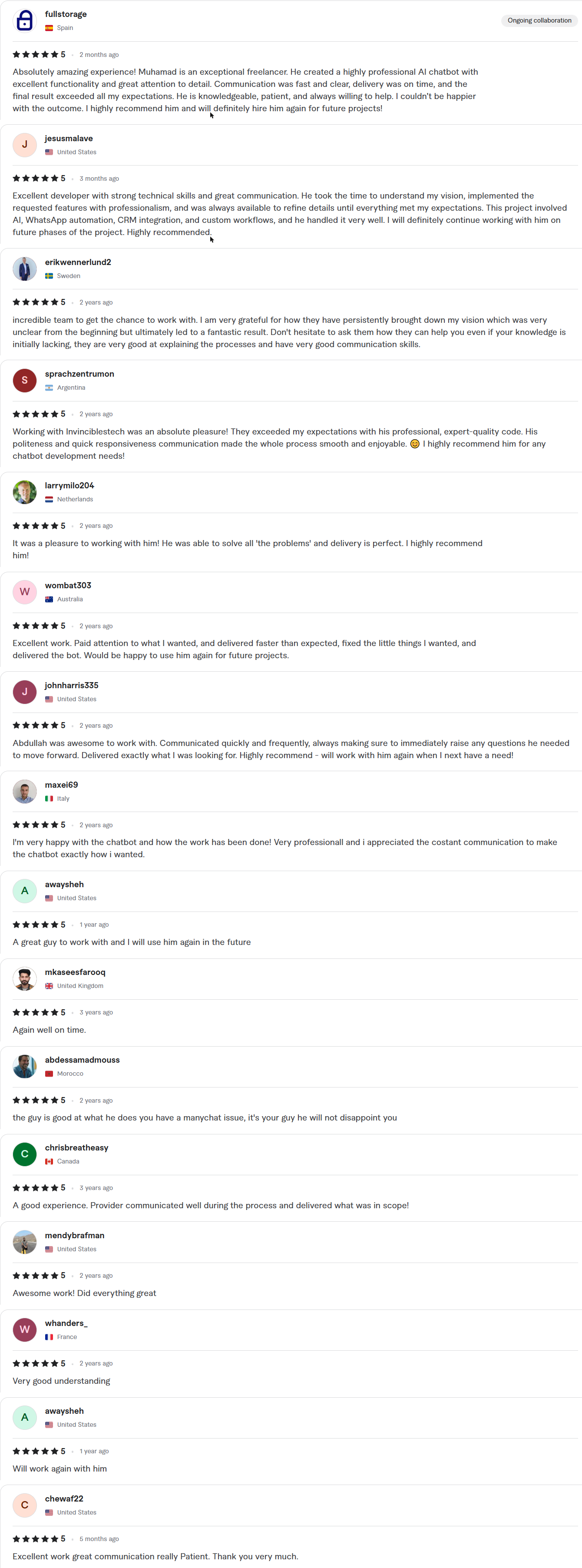
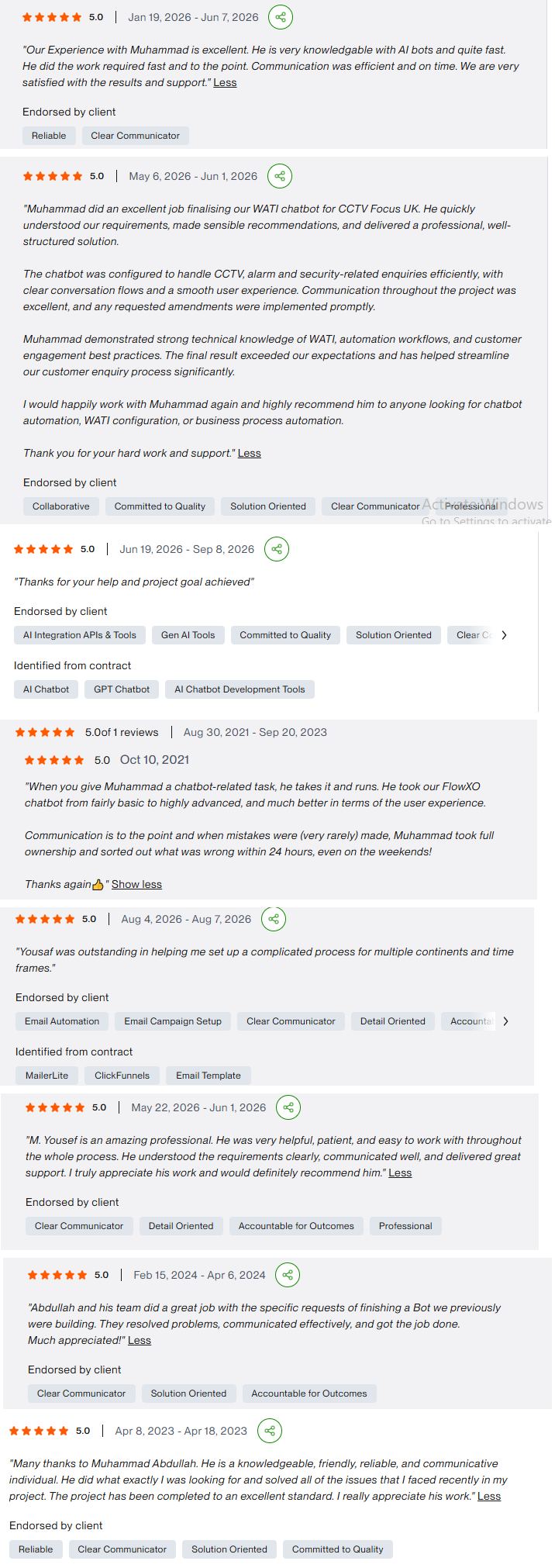
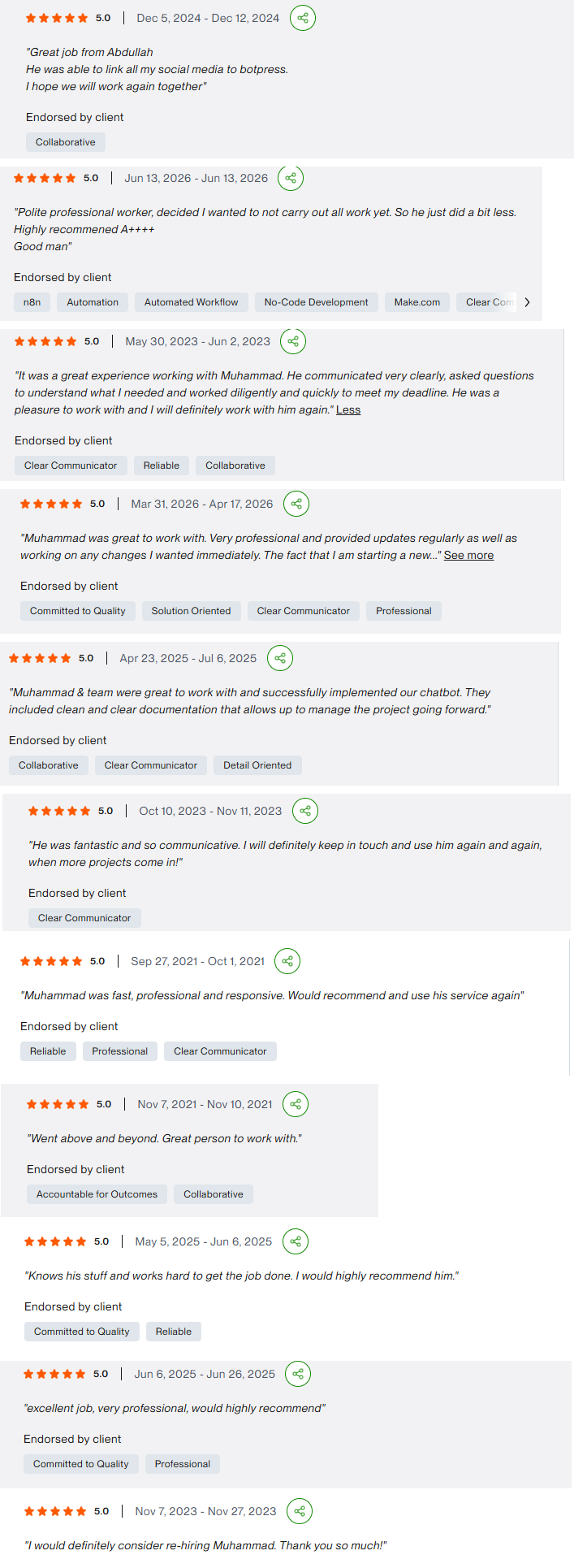
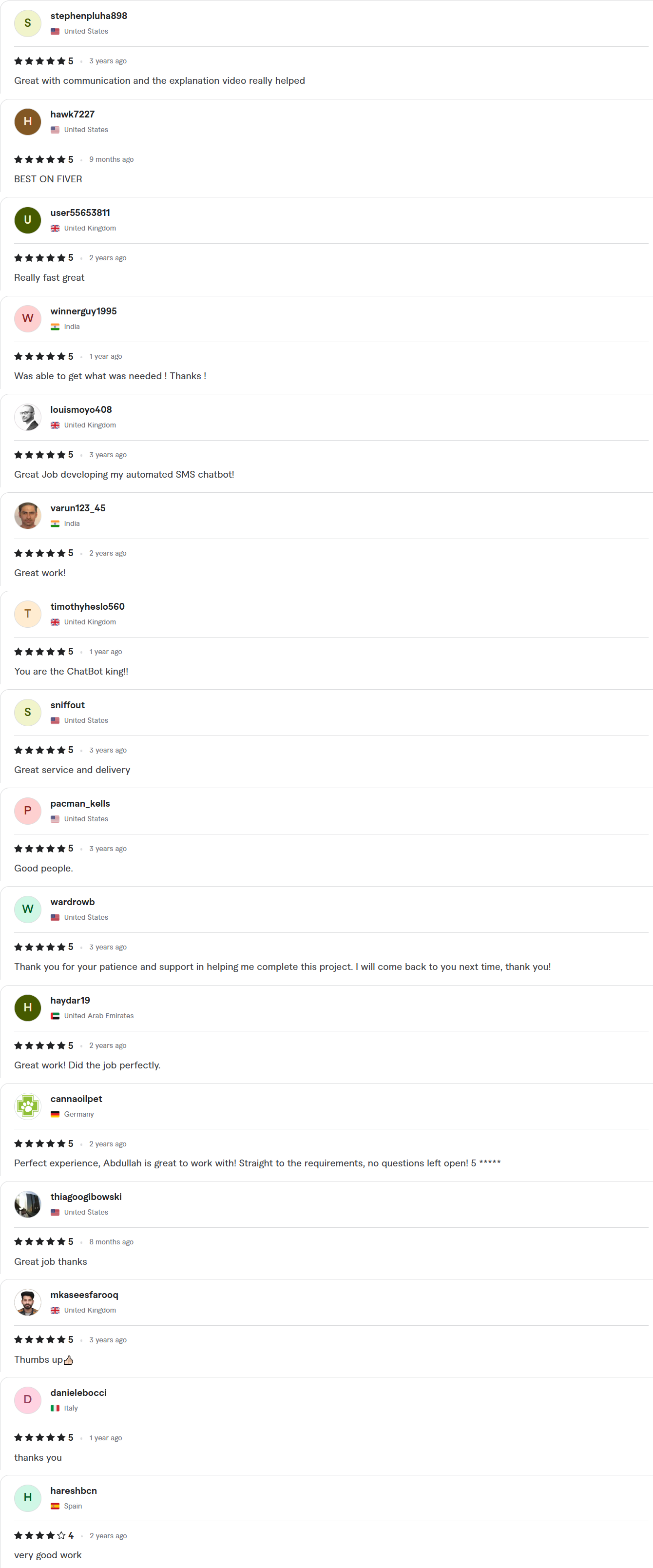
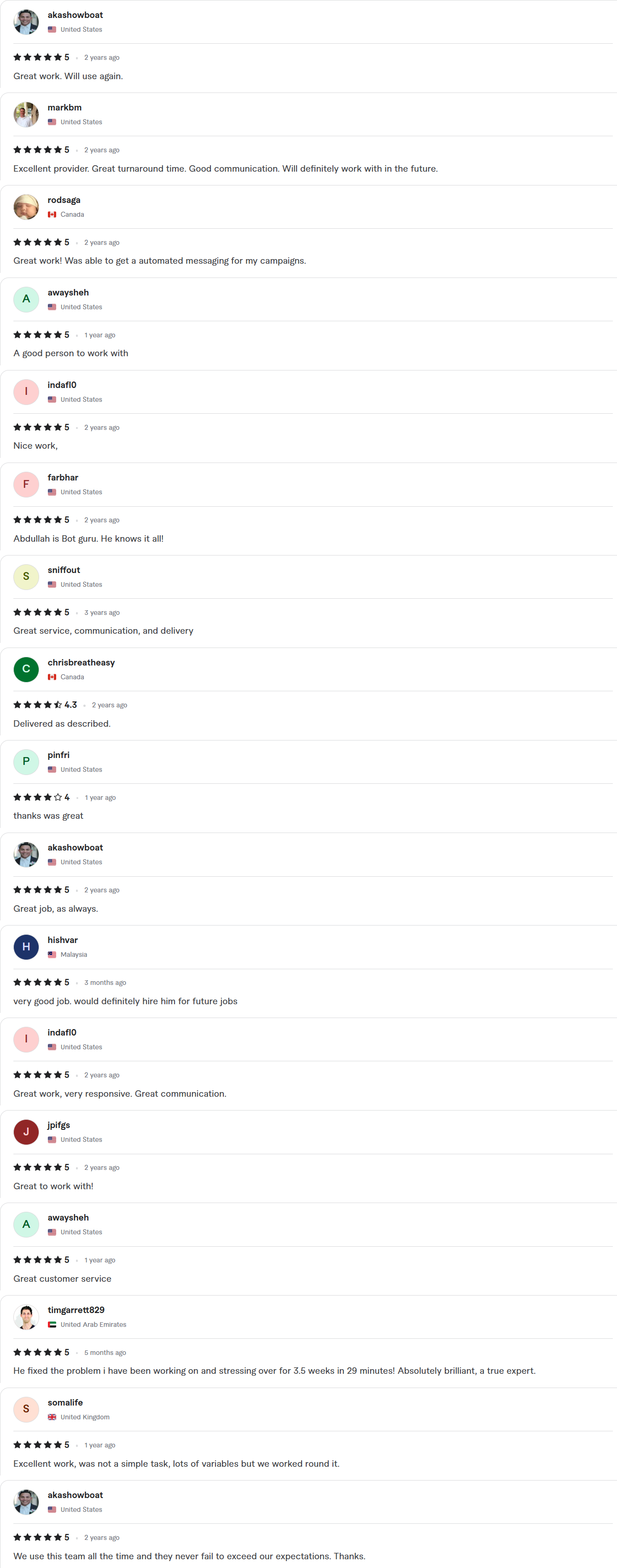
Client Reviews
5.0 average rating on Upwork and Fiverr
Answers, before you book.
Quick answers to the questions we hear most from networking providers.
Will it answer from our own runbooks?
Yes. The assistant answers from the runbooks, guides and knowledge base you give it, names the article it used and says so when nothing relevant exists. It then escalates instead of guessing.
What happens when it cannot fix the problem?
It opens a ticket in your helpdesk with the transcript, the steps already tried and the service details, and tells the customer what happens next. You set the priority rules.
Can it help during an outage?
Yes. Known incidents and planned maintenance can be shown to customers who ask, and one notice can go out by email or SMS to everyone affected, so the common question is answered before it reaches your queue.
Will it change anything on a customer’s network?
No. It guides customers through documented checks and collects information. Changes to customer networks, security incidents and anything the runbook does not cover always go to an engineer.
Do I need new software to use it?
No. It connects to the helpdesk, phone system and channels you already use, where they offer an interface, and adds a CRM only if you want one.